
Electric golf cart problems such as poor pickup, loss of power on slopes, or a cart that simply won’t move are almost always linked to the power train. Whether you own an EAYS golf cart or any modern electric cart, understanding how power flows through the system helps you identify issues faster and avoid unnecessary downtime.
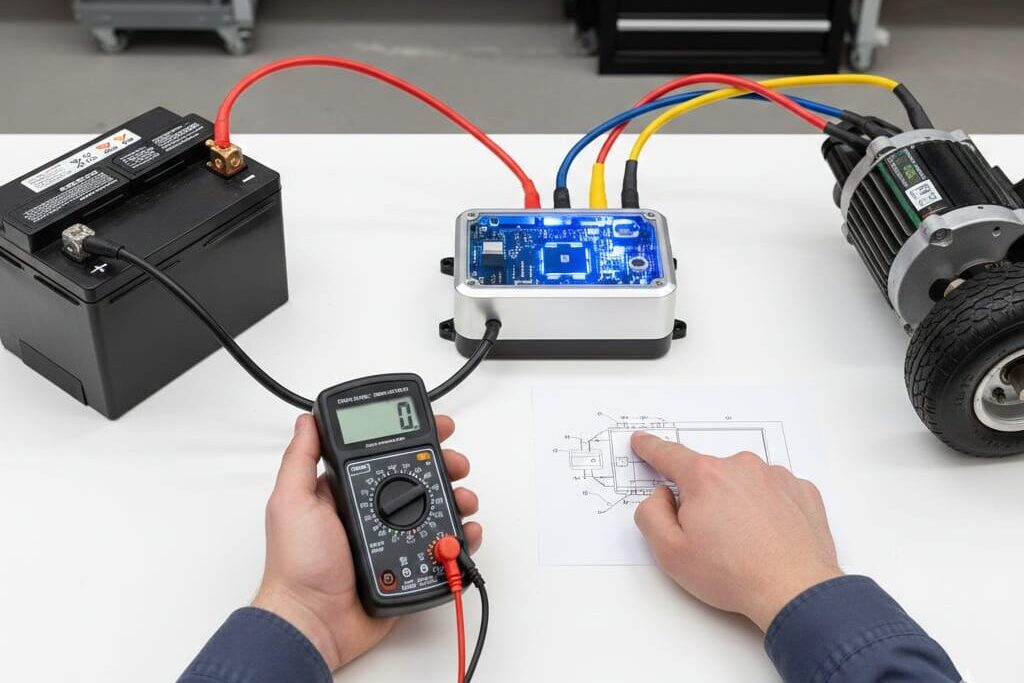
At EAYS Electrics Golf Cart, we believe informed owners experience fewer breakdowns. Let’s break down how the battery, controller, and motor work together—and how to troubleshoot each stage effectively.
1. The Power Source: Battery Pack (DC Supply)
The battery pack is the heart of the system, storing energy as Direct Current (DC). Most electric golf carts operate on 48V systems.
How It Works
Two heavy-gauge cables—Positive (+) and Negative (−)—carry high-amperage DC power directly from the battery pack to the controller.
Battery Troubleshooting Tips
- Voltage Drop Test
A fully charged 48V battery pack should read ~52.4V at rest.
If voltage drops sharply when accelerating or climbing a hill, one or more battery cells may be weak or failing. - Terminal Corrosion
White or bluish corrosion on terminals increases resistance, generates heat, and can damage the controller. Clean and tighten all connections.
💡 Regular battery maintenance significantly extends the life of your EAYS electrics golf cart.
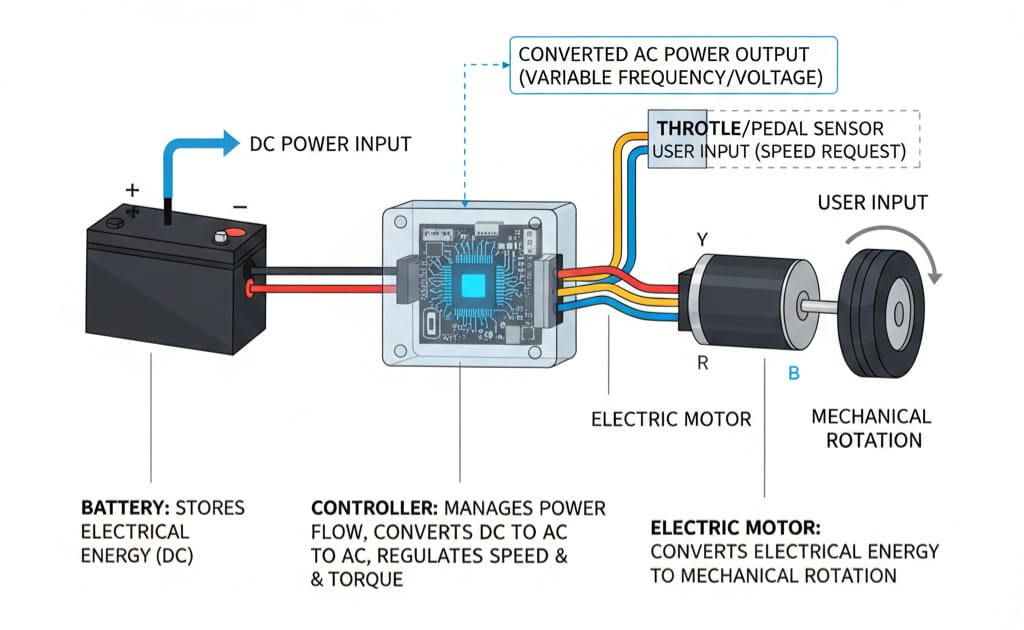
2. The Brain: Electronic Speed Controller (ESC)
The controller is the most advanced component in an electric golf cart. It regulates speed, torque, and motor behavior.
What the Controller Does
- Receives throttle input from the pedal sensor (ITS or potentiometer)
- Controls torque for hill climbing
- Limits top speed (RPM)
- Converts DC battery power into AC power for modern motors
DC to AC Conversion
Most newer golf carts use AC motors. The controller acts as an inverter, converting:
- 2-wire DC input (battery)
- Into 3-wire AC output (R-Y-B phases)
Controller Troubleshooting Tips
- Solenoid Click Test
If the solenoid clicks but the cart doesn’t move, the controller may not be sending output to the motor. - Overheating Check
A controller that is too hot to touch may indicate:- Internal short
- Excessive load
- Undersized motor for hilly terrain
3. The Muscle: 3-Phase Electric Motor
Most high-efficiency carts, including EAYS golf carts, use 3-phase AC motors with R-Y-B (Red, Yellow, Blue) wiring.
Understanding the R-Y-B Connection
High-efficiency golf carts use 3-phase AC motors, connected by:
- R (Red)
- Y (Yellow)
- B (Blue)
This setup allows:
- Smooth acceleration
- Higher torque
- Regenerative braking
Motor Troubleshooting Tips
- Burnt Smell Warning
A scorched odor often indicates overheated windings or insulation failure. - Continuity Test
With cables disconnected:- There should be continuity between R-Y-B terminals
- There should be no continuity between any terminal and the motor housing (ground fault)
Quick Diagnosis Table
| Symptom | Likely Cause | Recommended Action |
|---|---|---|
| Cart won’t move, no click | Battery / Solenoid | Check main fuse and battery voltage |
| Solenoid clicks, no movement | Controller | Check R-Y-B output voltage |
| Slow speed / weak hill climbing | Battery / Controller | Test voltage sag under load |
| Jerky or uneven acceleration | Throttle Sensor | Inspect ITS or potentiometer |
Conclusion: The Battery–Controller–Motor Handshake
The reliability of any electric golf cart depends on a smooth working relationship between the battery, controller, and motor. When this “power handshake” is maintained, performance stays consistent and breakdowns are rare.
Pro Maintenance Tips
- Keep battery terminals clean and tight
- Maintain proper battery water levels in case of lead acid batteries, whereas lithium batteries didn’t have water checks
- Ensure adequate controller cooling
- Match motor power to terrain (especially hills)
By understanding how power flows from 2-wire DC input to 3-wire R-Y-B AC output, you can diagnose over 90% of electric golf cart problems right from your garage.
With proper care, your EAYS Electrics Golf Cart will deliver dependable performance on both flat terrain and challenging slopes.
Also read : Troubleshooting 12V Accessories in EAYS Electrics Golf Cart